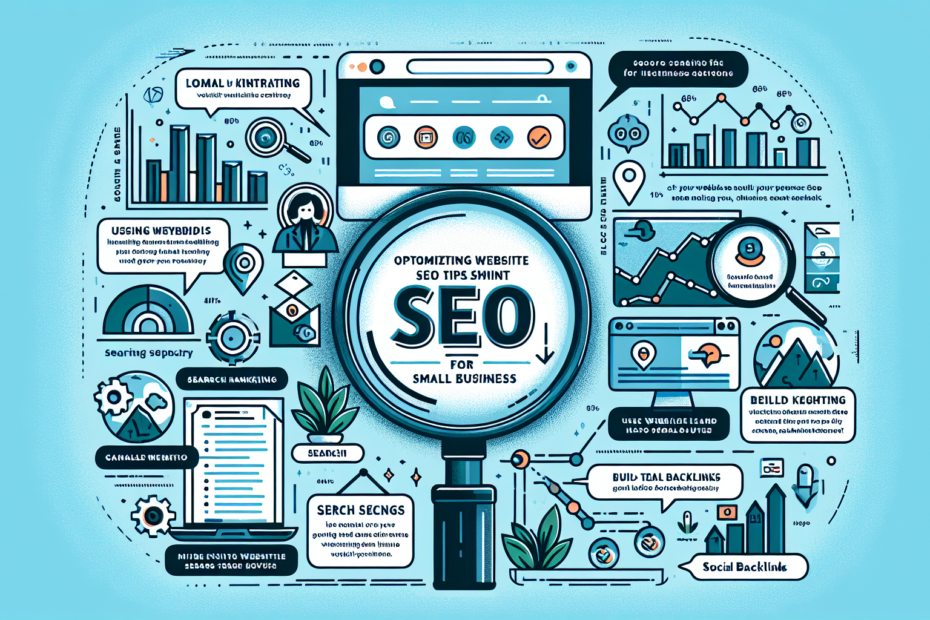
Did you know that 93% of online experiences begin with a search engine? As a small business owner, it’s crucial to have a strong online presence so that potential customers can easily find you. Search Engine Optimization (SEO) is the key to improving your visibility and driving organic traffic to your website. While SEO might sound intimidating, implementing a few simple strategies can make a significant impact on your business. In this article, we’ll share some valuable tips to help you navigate the world of SEO and boost your online presence.
1. Do Keyword Research
Keywords are the foundation of SEO. Before you start optimizing your website, it’s essential to identify the right keywords that are relevant to your business. Put yourself in your customers’ shoes and think about what they would search for when looking for products or services like yours. Use keyword research tools like Google Keyword Planner, Ubersuggest, or SEMrush to find relevant keywords with high search volume and low competition. Incorporate these keywords naturally throughout your website, including in your page titles, headings, content, and meta descriptions.
2. Optimize Your Website’s Structure and Navigation
A well-structured website is not only user-friendly but also search engine-friendly. Ensure that your website has a clear and logical hierarchy, with important pages easily accessible from the main navigation menu. Use descriptive and keyword-rich URLs for each page, such as “www.yourbusiness.com/service-name” instead of “www.yourbusiness.com/page1?q=1234.” This will make your URLs more readable to search engines and users alike.
3. Create High-Quality and Engaging Content
Content is king when it comes to SEO. By creating high-quality and engaging content, you not only attract website visitors but also improve your search engine rankings. Regularly publish useful articles, blog posts, videos, or infographics that address your customers’ pain points or provide valuable information related to your industry. Incorporate relevant keywords in your content naturally, but avoid keyword stuffing, as it can have a negative impact on your rankings.
4. Build High-Quality Backlinks
Backlinks, or links from other websites to yours, are an important ranking factor in SEO. They indicate to search engines that your website is reputable and trustworthy. Focus on building high-quality backlinks from authoritative websites by reaching out to industry influencers, guest posting on relevant blogs, or obtaining mentions and links from reputable sources. Avoid purchasing low-quality or spammy backlinks, as they can harm your rankings and reputation.
5. Optimize Your Website for Mobile
With the increasing use of smartphones and tablets, it’s crucial for your website to be mobile-friendly. A mobile-responsive website not only improves the user experience but also helps your SEO. Google has a mobile-first indexing approach, which means it primarily considers the mobile version of your website for indexing and ranking. Make sure your website is optimized for mobile by using responsive design, fast-loading pages, and easy-to-click buttons and links.
6. Leverage Local SEO
If you have a physical store or offer services in a specific location, optimizing your website for local search is essential. Include your business’s name, address, and phone number (NAP) on every page, preferably in the footer, so it appears consistently across your website. Add your business to online directories and review platforms such as Google My Business, Yelp, and Bing Places for Business. Encourage your satisfied customers to leave positive reviews, as they can significantly impact your local search rankings.
7. Monitor and Measure Your Progress
SEO is an ongoing process, and it’s crucial to monitor and measure your progress regularly. Utilize tools like Google Analytics and Google Search Console to track your website’s performance, including organic traffic, keyword rankings, and user behavior. Analyze the data to identify areas for improvement and adjust your SEO strategies accordingly.
Conclusion
Implementing these SEO strategies can seem daunting at first, but the rewards are worth it. By investing time and effort into optimizing your website for search engines, you’ll improve your online visibility, drive organic traffic, and ultimately grow your small business. Remember to prioritize creating high-quality content, researching relevant keywords, building backlinks, optimizing for mobile, and leveraging local search. Stay consistent, be patient, and watch your business flourish in the digital world.